
The Dynamic Ingress Framework: A Multi-Tiered Architectural Model for SaaS-Native Data Enrichment and Governance in OTM Cloud
By Balaganesh Swaminathan
Senior OTM Solutions Architect | 21+ Years of Enterprise Experience
Date: May 2026 | Domain: OTM Cloud Architecture / Data Governance
1. Executive Abstract
In modern Oracle Transportation Management (OTM) Cloud ecosystems, a critical ‘Validation Gap’ frequently emerges between localized operational flexibility and enterprise-wide data integrity. Standard user interfaces inherently lack the native mechanisms necessary to enforce complex, multi-variable business rules during manual data entry operations, traditionally rendering costly external customized forms or isolated third-party middleware integrations mandatory. This paper introduces the Dynamic Ingress Framework—an original, high-performance, SaaS-native architectural framework that utilizes the native Tracking Event (TE) infrastructure as a fully validated, real-time, and auditable data enrichment gateway. By strategically repurposing standard OTM transactional objects rather than building bespoke external modifications, this framework systematically neutralizes structural integration complexity, prevents audit fragmentation, and guarantees 100% cloud upgrade resiliency.
2. The Problem: The High Cost of Externalization
Global logistics organizations routinely require specialized mid-lifecycle data enrichment paths that standard Out-of-the-Box (OOB) application screens cannot govern with the necessary structural rigor. Historically, enterprise architects have resolved these data validation discrepancies by developing external web forms or bespoke data entry portals. This architectural model introduces acute liabilities and accumulates severe structural technical debt across three core axes:
- Integration Complexity Overhead: Architectures are forced to deploy, monitor, and maintain fragile REST/SOAP orchestration wrappers to safely transport data from external capture points into the core TMS staging tables.
- Mandatory Cloud Upgrade Vulnerability: These non-native external decoupled software forms represent a severe maintenance tax, frequently breaking during mandatory, quarterly Oracle SaaS multi-tenant software version upgrades.
- Compliance and Audit Fragmentation: Transactional modifications, user metadata logs, and operational override histories reside completely outside the core TMS native audit trail, scattering compliance data and impeding global regulatory visibility.
3. The Solution: Triple-Tiered Architectural Logic
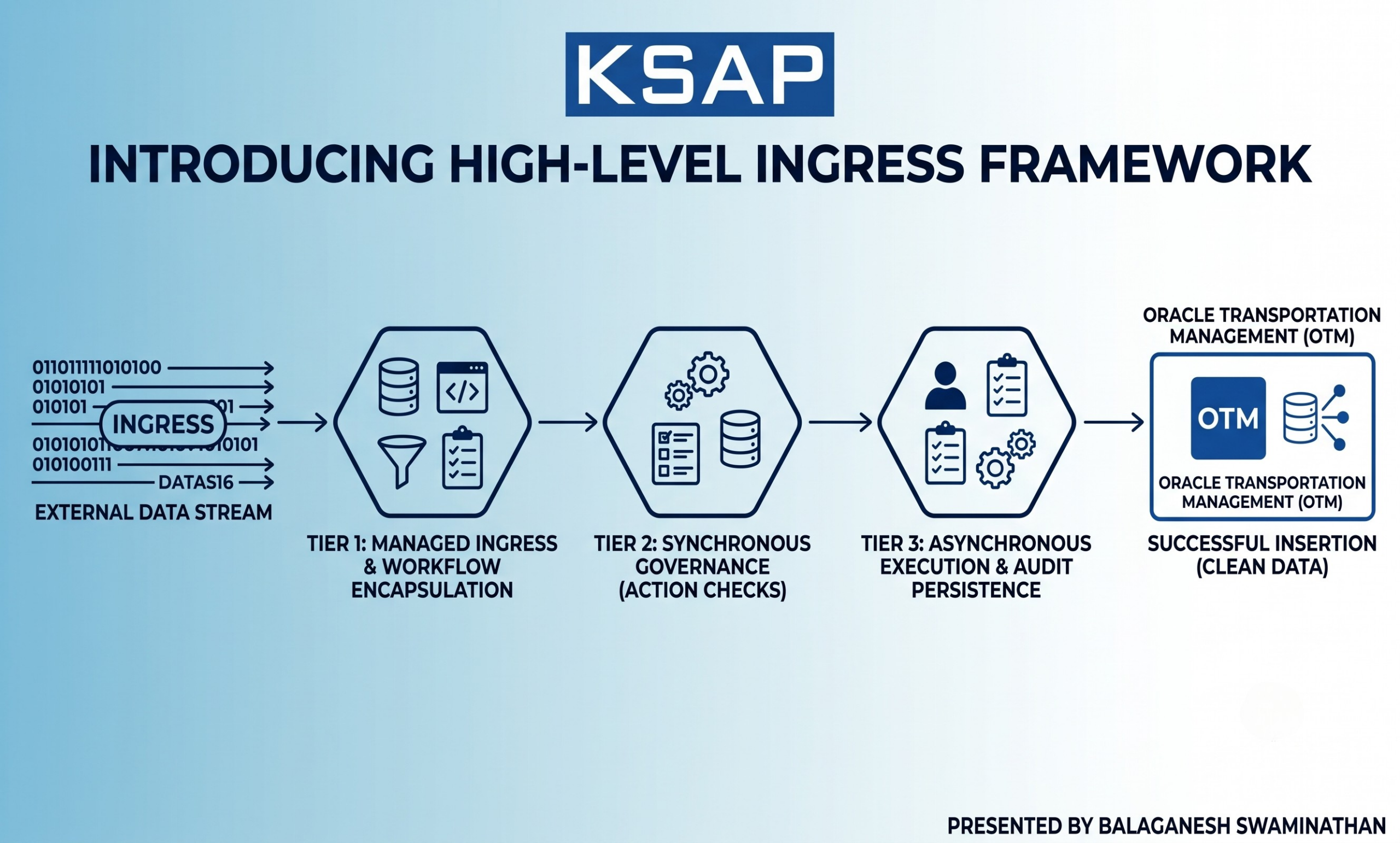
The Dynamic Ingress Framework resolves this structural fragmentation by centralizing validation and execution logic completely within the OTM application runtime environment. This is achieved via a tightly coupled, three-tier processing model:
Tier 1: Managed Ingress & Workflow Encapsulation
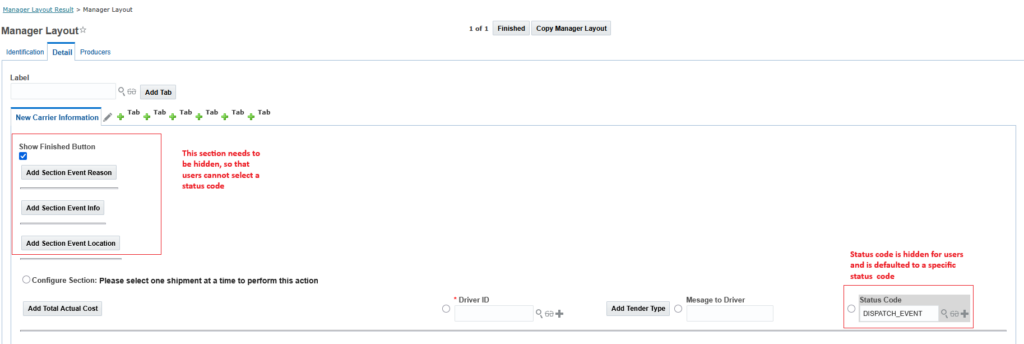
The framework instruments the native high-volume integration interface table IE_SHIPMENT_STATUS (Tracking Event object) to serve as a hardened UI ingress portal. Through meticulous Manager Layout customization, a specialized, bulletproof data capture layer is built directly into the user screen:
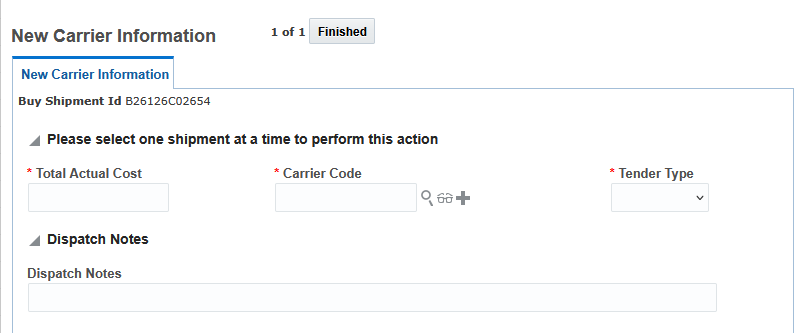
- Mandatory Field Enforcement: The user interface is engineered to hard-block transactions at the presentation tier if critical variables (such as ‘Total Actual Cost’, ‘Carrier Code’, or ‘Tender Type’) are null, preventing incomplete datasets from reaching the database boundary.
- Status Code Concealment & Workflow Hardening: To eliminate human error and bypass manual alteration risks, the ‘Status Code’ UI field is completely concealed from the operator view and programmatically defaulted to an immutable custom literal (e.g., DISPATCH_EVENT). This isolates custom workflows, ensuring standard automated carrier tracking events remain un-impacted while preventing accidental or un-audited manual execution triggers.
- Flexfield Lookup Normalization: Standard alphanumeric flexfield attributes are repurposed as structured, validated Lookup Lists for Locations, Items, and Transport Handling Units (THUs), securing absolute nomenclature parity and data purity at the exact point of data origin.
Tier 2: Synchronous Governance (Action Checks)
To ensure that ‘dirty’ or non-compliant datasets never commit to the transactional tables, the framework deploys real-time, synchronous application-tier Action Checks executed on the Tracking Event record lifecycle. This governance layer enforces strict technical rules before the transaction can be committed:
- Structural Data Type Verification: Performs immediate verification of comprehensive field populations, data type formatting, and alphanumeric length constraints directly at the transaction boundary.
- Real-Time Operational Certification: Cross-references incoming carrier records against real-time regulatory compliance databases and external certification networks (such as RMIS status codes) prior to committing downstream requests.
- Surgical Predicate Isolation: The underlying logic utilizes highly optimized SQL action checks scoped exclusively to the ‘Add Tracking Event’ transaction code block. This allows the system to apply rigid business parameters to this manually entered events while maintaining standard processing rules for standard tracking events.
SELECT ‘X’
FROM ie_shipmentstatus
WHERE (
— Group 1: Business Rule Enforcement for Managed Ingress
( <Insert Business Condition Here> AND status_code = ‘DISPATCH_EVENT’ )
OR
— Group 2: Bypass Logic for Other OTM Tracking Events
( status_code <> ‘DISPATCH_EVENT’ )
)
AND i_transaction_no = ?
Tier 3: Asynchronous Execution & Audit Persistence
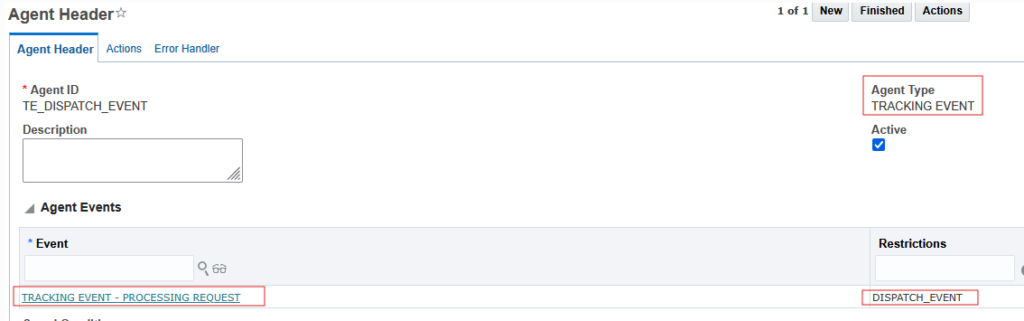
Once a payload successfully passes the synchronous database boundary rules, a dedicated Automation Agent picks up the transaction. Triggered by the standard ‘Tracking Event – Processing Request’ listener, this agent processes the payload and programmatically updates or creates parent transactional records asynchronously. This architectural separation guarantees that a 100% transparent audit trail capturing the exact user, action timestamp, and field modification parameters is archived natively within standard OTM system history, ensuring absolute accountabilities for all manual data overrides
4. Industrial Application & Case Study Analysis
Case Study A: Transactional Agility in Automotive Logistics
In a high-throughput implementation for a global automotive remarketing leader, the framework replaced a brittle manual dispatch procedure. By enforcing strict carrier eligibility constraints and hard cost thresholds within the UI layout before an automated transport tender could be generated, the solution successfully eliminated downstream transactional faults within provider portals and significantly optimized operator planning velocity.
Case Study B: Master Data Integrity in Pharmaceuticals
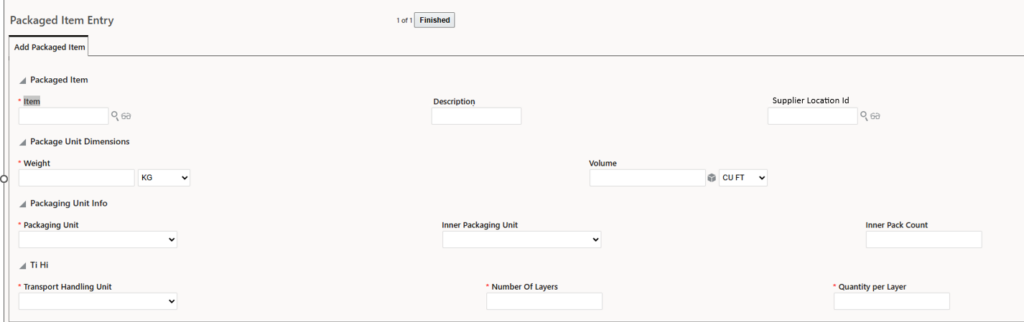
For a top-tier pharmaceutical enterprise, the framework addressed a critical operational risk during the mid-lifecycle creation of Packaged Items. The custom-engineered entry interface enforced rigid alphanumeric GID nomenclature constraints (Packaging Unit, Inner Packaging Unit, CMO and Item). This programmatically prevented the creation of duplicate master records—a crucial data protection validation rule completely absents in standard out-of-the-box master data screen layouts.
Case Study C: Real-Time Fleet Execution and Communication Flow
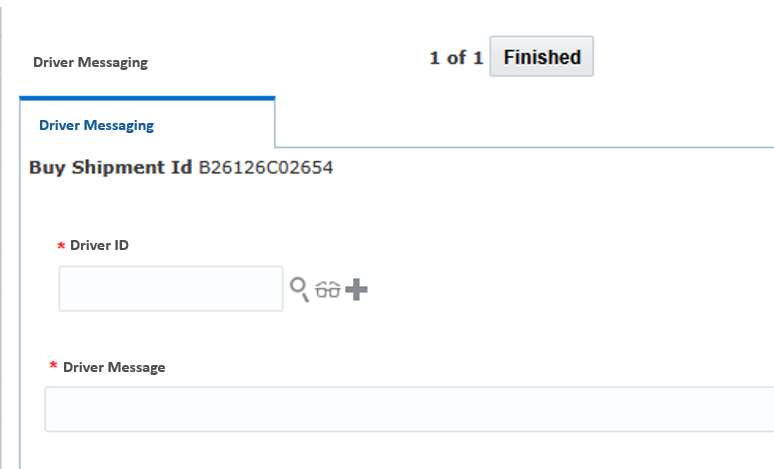
The framework was successfully deployed to bridge the real-time visibility and data capture gap separating regional fleet dispatchers from active mobile assets. By converting ad-hoc dispatcher operational notes into highly structured Tracking Event records, the architecture simultaneously archived critical messages within native Shipment Remarks while dynamically streaming the payloads onto in-cab driver tablets, establishing a cohesive, tamper-proof operational audit log.
Case Study D: Operational Safety Interlocks (Post-Pickup Cancellation)
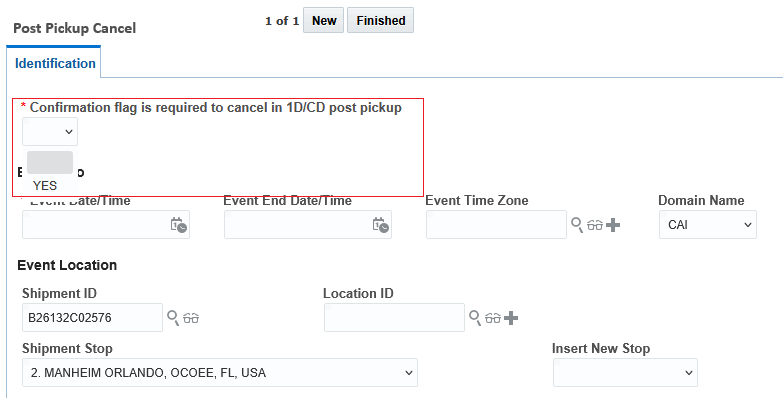
In high-volume logistics environments, modifying a shipment after physical carrier pickup represents a high-risk operational exception. To protect the integrity of active workflows, a specialized ‘Safety Interlock’ form was built using Tier 2 validation checks. The user screen mandates an explicit, mandatory ‘Confirmation Flag’ drop-down selection requiring a manual ‘YES’ validation input before the application tier will permit a transactional delete or status change, neutralizing accidental data loss or unauthorized lifecycle alterations.
Professional Biography

Balaganesh Swaminathan is a Senior OTM Solutions Architect with over 21 years of experience delivering enterprise-grade logistics and transportation solutions for global market leaders in the pharmaceutical, automotive, and wholesale distribution sectors. A recognized OTM domain expert and active industry thought leader, he has frequently contributed to official OTM SIG forums, presenting advanced original frameworks for fleet execution, driver communication networks, and complex multi-stop routing optimization. In his role at KSAP Technologies, he architects scalable Oracle logistics ecosystems that maximize transactional velocity, strengthen application governance, and significantly minimize structural technical debt.